
Section 27 17 00 Testing Identification And
Search optical fiber, connectivity, cable management and network infrastructure references.
-
Fiber Optic Repeater Section Testing Procedures
Standard for Installing and Testing Fiber OpticsAlthough most fiber optic cables are not conductive, any metallic hardware used in fiber optic cabling syst.
[PDF Version]
-
Principle of Testing the Functionality of Relay Protectors
This guide explores the different types of protection relays and their testing procedures, with a focus on tools like secondary injection test sets and three-phase relay test sets. Secondary Injection Test Kit – Simulates relay inputs with the controlled currents and voltages. Since the basic function of a protection relay is to correctly function under abnormal. Protective circuit functional testing, including lockout relay testing, must take place immediately upon installation, every 2 years thereafter, and upon any change in wiring. The equipment is designed as a portable kit for on-site testing of protective devices, circuit-breakers, trip coils.
-
Relay Protection Testing Outline
The IEC standard for relay testing mainly refers to IEC 60255. Protective relays are devices that detect faults and initiate circuit breaker operation to isolate the. The testing and verification of relay protection devices can be divided into four groups: Type tests are needed to prove that a protection relay meets the claimed specification and follows all relevant standards. Since the basic function of a protection relay is to correctly function under abnormal. Modern networks rely on and utilize relay protection systems in order to maintain a safe electrical environment by continuously monitoring devices for problems and controlling the grid to isolate problematic areas. On such products, intensive testing is desired to prove its characteristics and to gain information about it. (ii) On relay types which. THEY SHOULD BE GIVEN FIRST LINE MAINTENANCE ATTENTION. 15 seconds in its 30+ year life.
[PDF Version]
-
Testing a beam splitter with a standard optical power meter
Start by connecting a launch reference cable to the optical light source with the correct wavelength (since some splitters depend on the wavelength). PLC Splitters are usually used in passive optical networks (PONs) to distribute fiber to individual homes or businesses. There is something different between testing an optical splitter and a patch cable although both of them use an optical power meter and light source to test. It is a crucial component in Passive Optical Networks (PON) and is widely used in telecommunications, CATV (Cable TV), and FTTH. Testing a splitter or other passive fiber optic devices like switches is little different from testing a patchcord or cable plant using the two industry standard tests, OFSTP-14 for double-ended loss (connectors on both ends) or FOTP-171 for single-ended testing.
[PDF Version]
-
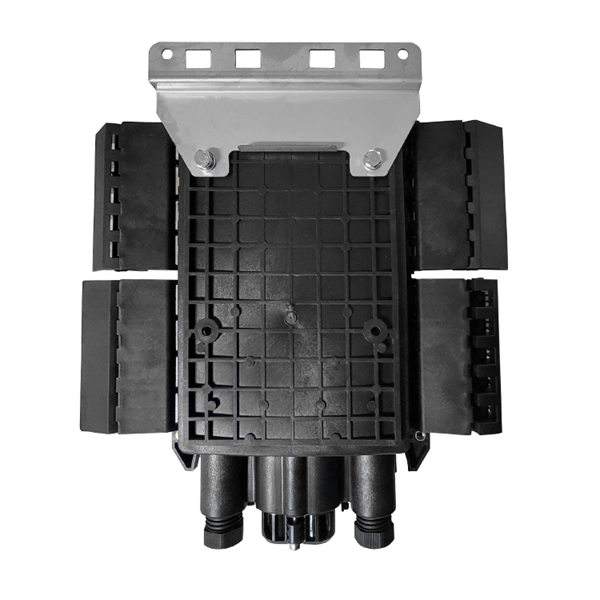
Cable and Optical Fiber Testing Equipment
Explore 79 top manufacturers and suppliers of Fiber Optic Test Equipment in our comprehensive photonics buyers' guide. Fiber optic test equipment encompasses a range of specialized tools and instruments designed to evaluate the performance and integrity of fiber optic. Torontech is a global leader in providing a full range of Optical Fibre Cable Testing Machines (OFC Testers), engineered with cutting-edge Canadian technology to deliver the highest precision, durability, and performance in the industry. Our advanced OFC testing solutions are trusted worldwide by. Fiber optic cable is a type of cabling that contains one or more optical fibers for transmitting data at high speeds and/or over long distances using light. These fibers are most commonly made of glass and are very thin, typically less than a tenth of the width of a human hair. Optical and fiber test equipment plays a vital role in the installation, certification, maintenance, and troubleshooting of high-speed fiber optic networks. This category includes OLTS certifiers, OTDRs, optical power meters, light sources, and visual fault locators.
[PDF Version]
-
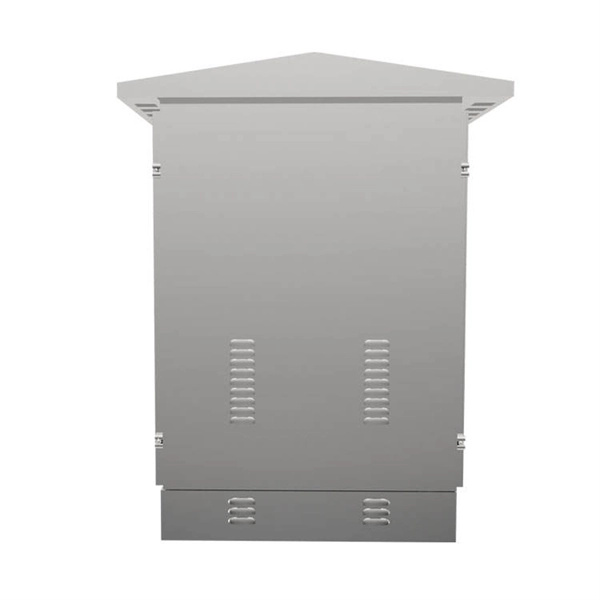
Cable tray section sealing
When cable trays pass through walls or floors, seal openings using fire-rated penetration sealing materials. Do not modify or damage the tray coating or structure during use. SLIPSIL Sealing Plugs are an ideal solution for the fire-safe, gas and / or watertight sealing of penetrations carrying single or. The following charts give the number of 3M pillows needed to completely firestop an opening that cable tray passes through. UL Listed Systems Concrete Wall - C-AJ-4056 3 HR F-Rating, 3/4 HR T-Rating Gypsum. Seal cable penetrations with our modular firestop solutions, designed to create water-, smoke- and gas-tight barriers in energy and industry projects both onshore and offshore. Process flow: reserved openings → busway installation → distribution box positioning and installation →. maintain spacing or to keep cables in place when the tray is ect the minimum bend ra-dius for cables as they exit the bottom of the cable tray.
[PDF Version]
-
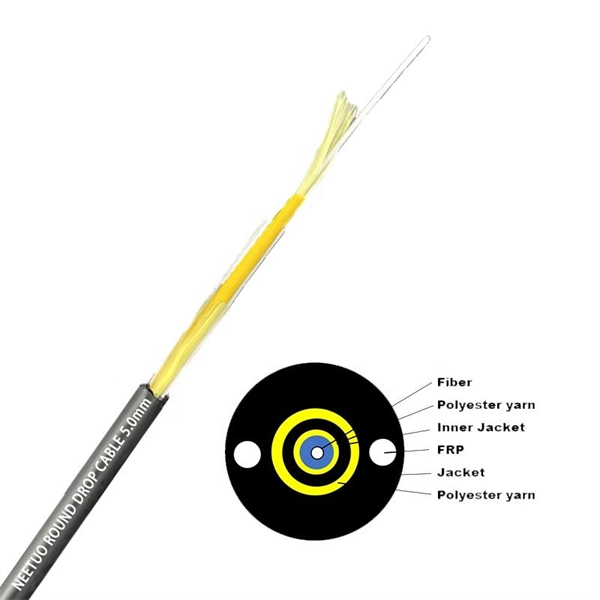
Distribution Box Class Identification
Distribution boxes can be broadly categorized by their voltage level, application environment, and primary function. The two most fundamental distinctions are between Low-Voltage Distribution Boards and Medium-Voltage Distribution Enclosures, often referred to as Ring Main Units. A Distribution Box, commonly known as a DB Box, serves as the central point for safely distributing electrical power from a main supply to multiple downstream circuits. It houses protective devices such as circuit breakers or fuses, ensuring both equipment protection and user safety.
More communications references
- ONU and Fiber Optic Switches
- Chad Network Cable Tray Manufacturer
- Fiber optic cable electrically disconnected
- Do I need to replace my fiber optic router again if I ve already upgraded
- The function of jumper wire strippers
- Adapter for fiber optic cables and pigtails
- Introduction to the Power Distribution Box in Guyana
- Smart City Optical Power Meter Remote Monitoring Type
- I want to learn how to connect a distribution box
- What material are cable tray supports made of
- What is the list for fiber optic cable introduction
- How to achieve continuous tripping in relay protection
- Wholesale of 6-core hollow optical fiber
- Drop cable single-mode fiber optic cable