
Nanophotonic Color Splitters For High Efficiency Imaging
Search optical fiber, connectivity, cable management and network infrastructure references.
-
Single-mode lc fiber optic flanges offer high construction efficiency
The LC connector is specially designed for single-mode fiber optic cables. It minimizes signal loss and interference, which is very conducive to high-bandwidth and long-distance transmission. These couplers are designed to provide precise, low-loss connections for LC and SC UPC connectors. This. In many applications of fiber optics, it is necessary to connect fiber ends (terminations) in some way such that light from one fiber can get into the other fiber without losing too much of its optical power. It can achieve the conversion between FC/PC, FC/APC, SMA fiber optic connectors and standard SM series threaded connectors or C-Mount threaded, as well as the conversion. Belden offers standalone Fiber Adapter modules for use in a variety of applications. All Standard Fiber Adapters listed above come.
[PDF Version]
-
Color Requirements for Electrical Distribution Boxes
If a circuit includes a neutral or midpoint conductor, then it should be identified by a blue colour (preferably light blue ). Light blue is the colour used to identify intrinsically safe conductors, and must not be used for any other type of conductor. The preferred colours for AC phase conductors are: • L1: Brown.
-
Areas with many beam splitters
In its most common form, a cube, a beam splitter is made from two triangular glass prisms which are glued together at their base using polyester, epoxy, or urethane-based adhesives. (Before these synthetic resins, natural ones were used, e.g. Canada balsam.) The thickness of the resin layer is adjusted such that (for a certain wavelength) half of the light incident through one "port" (i.e., face. OverviewA beam splitter or beamsplitter is an that splits a beam of into a transmitted and a reflected beam. It is a crucial part of many optical experimental and measurement systems, such as Beam splitters are sometimes used to recombine beams of light, as in a. In this case there are two incoming beams, and potentially two outgoing beams. But the amplitudes. For beam splitters with two incoming beams, using a classical, lossless beam splitter with Ea and Eb each incident at one of the inputs, the two output fields Ec and Ed are linearly related to the inputs thro.
[PDF Version]
-
Industrial Control High and Low Voltage Complete Sets of Equipment
This solution covers a complete set of power equipment from low-voltage distribution cabinets, high-voltage switchgear to transformers, automation control systems, etc., aiming to provide comprehensive and customized power solutions for various users. Our high and low voltage complete electrical equipment solutions are designed based on a deep understanding of the current development trends in the power industry and accurate predictions of future power demand. The cable connectors in the tap boxes feature high-grade insulation. These products are highly integrated, compact in size, structurally compact, safe and reliable in operation, easy to maintain, and portable. In distribution systems, they can be used in ring network distribution systems as well as in dual power supply or radial terminal distribution systems. They are known as complete switchgear assemblies because they integrate inside them such. GGD is a Fixed Complete-set Switchgear Equipment with simply and flexibly.
[PDF Version]
-
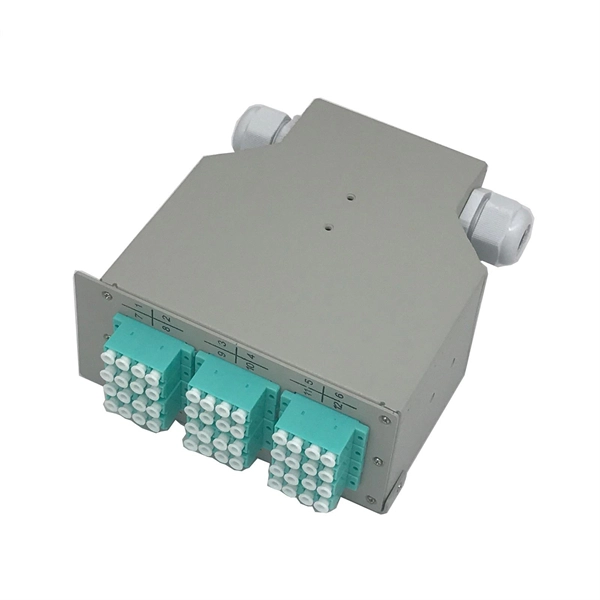
How many optical splitters should be connected to the fiber distribution box
Optical couplers can split or join signals in fibers. PLC splitters are based on planar lightwave circuit technology, ensuring uniform signal distribution and supporting high split ratios up to 1×64 or even higher. In FTTH deployments, they allow one fiber from the central office to serve multiple subscribers without requiring active power in the distribution network. Because splitters are passive, they. In any FTTH network, the PLC splitter is not just a passive optical component — it is a capacity decision point. Every choice related to splitter ratio, placement, and integration directly affects: For ISPs and FTTH contractors, misunderstandings around PLC splitters are one of the most common root. A fiber broadband provider typically determines and overall split ratio for the network, such as 1x32 or 1x64, and uses combinations of splitters to meet that ratio with each PON port. 1x32 splits were common in North America for G-PON architectures. How should one settle on the deployment method? This article will give an overview and.
[PDF Version]
-
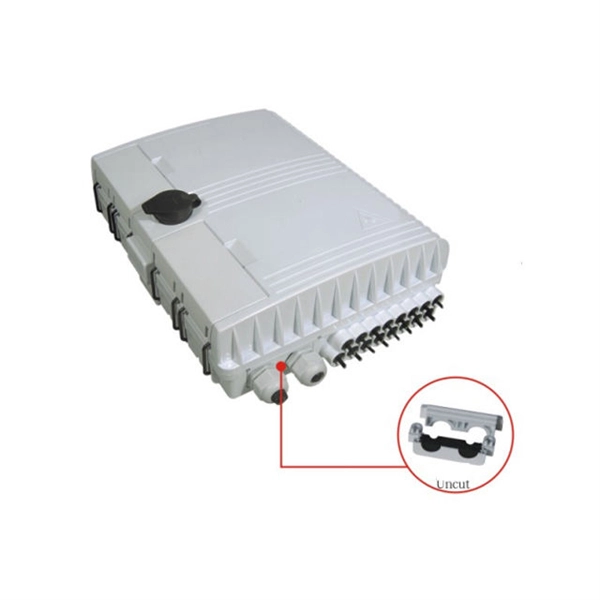
How are Huijue Optoelectronics beam splitters
In its most common form, a cube, a beam splitter is made from two triangular glass prisms which are glued together at their base using polyester, epoxy, or urethane-based adhesives. (Before these synthetic resins, natural ones were used, e.g. Canada balsam.) The thickness of the resin layer is adjusted such that (for a certain wavelength) half of the light incident through one "port" (i.e., face. OverviewA beam splitter or beamsplitter is an that splits a beam of into a transmitted and a reflected beam. It is a crucial part of many optical experimental and measurement systems, such as Beam splitters are sometimes used to recombine beams of light, as in a. In this case there are two incoming beams, and potentially two outgoing beams. But the amplitudes. For beam splitters with two incoming beams, using a classical, lossless beam splitter with Ea and Eb each incident at one of the inputs, the two output fields Ec and Ed are linearly related to the inputs thro.
[PDF Version]
-
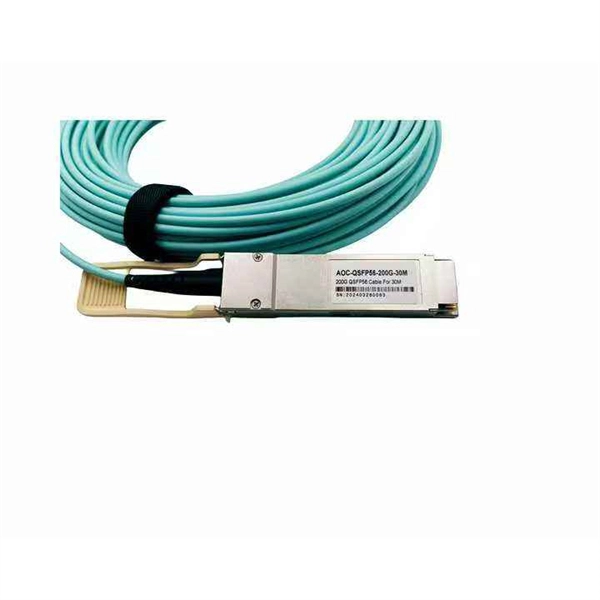
Principle of High Beam Power Supply Module
It delivers high voltage and current to generate and control a beam of electrons. Industries rely on this technology for applications like welding, machining, and material processing. In response to the power supply requirements of high‐power electron beam equipment, a 90kV/15kW intelligent fully digital controlled high‐frequency high‐voltage high‐power electron beam power supply is designed by studying the existing power supply systems of high‐power electron beam welding. Abstract: With the development of power electronic device technology, the continuous advancement of wide band gap devices has promoted the development of space power supplies. The working principle of an electron beam high-voltage power supply mainly includes the following steps: Electron emission: Electron emission is the process. The operation of any electron beam evaporator requires a well-matching set of power supplies and a control unit, in order to generate and guide the electron beam. The ability to. This user manual contains important information about the installation, functionality, start-up and operations of the Telemark ST Series High Voltage Electron Beam Power Supply.
[PDF Version]
-
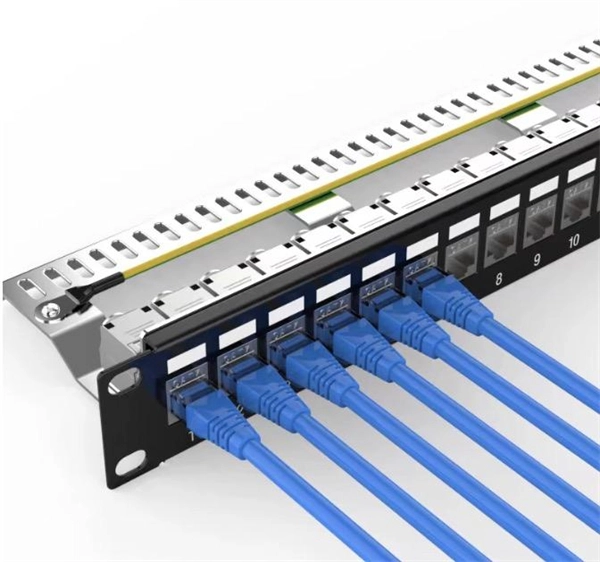
Fiber Optic Cable Color Masterbatch
Broad range of high-quality colour masterbatches with outstanding dispersion and dilution properties to suit fibre optical cable producer needs. High opacity: Solutions with intense colour and high opacity that comply with international standards. Contraction qualities: Masterbatches with excellent contraction properties that. Ampacet, a global masterbatch leader, has expanded its ELTech™ portfolio to include a range of high performance color masterbatches based on a Polybutylene Terephthalate (PBT) carrier resin and specifically designed for optical fiber cable PBT jacketing.
-
Color of 24-core single tube optical cable
Tubes with 24 uniquely colored fibers: Fibers 1 to 12 use the standard blue through aqua color sequence. Understanding fiber‑optic color codes is essential for any technician tasked with installing, maintaining, or troubleshooting modern fiber networks. This identification scheme follows the TIA/EIA-598, “Optical Fiber Cable Color Coding. ” This standard is adopted by; Telcordia GR-20 – Generic Requirements for Optical Fiber and Optical. A single 24-core fiber optic cable possesses two sets of twelve fibers which supports colossal amounts of data transfer. These cables guarantee uninterrupted internet service to dozens of users, which makes them. This sequence is used by UMH1A1J-24, MDS1JKT-24, and the LongSpan ADSS designs when 24 fibers per tube are specified. This standardized fiber optic color coding system helps prevent costly connection errors while dramatically. The Fiber Color Code, defined by the TIA-598 standard, establishes a universal system to identify fibers, connectors, and cables across global networks.
[PDF Version]
More communications references
- Classification of Fiber Optic Cable Splices
- Temperature measurement of small busbar
- How to connect the main line and the distribution box
- Find the live wire in the home distribution box
- Electrical distribution box metal shed
- Is the fiber distribution box a multimedia box Why
- Armored fiber optic cable TPU
- Hyperconverged AI Server Price Inquiry
- Gabon fiber optic cable grounding
- What are the different types of 380V switch relay protection
- Waterproof and dustproof optical cable
- Are optical modules universal for transmission equipment
- Electrical Experiments and Relay Protection