
4 Using Python On Windows Python 3 14 6 Documentation
Search optical fiber, connectivity, cable management and network infrastructure references.
-
How to fine-tune the lighting using a beam splitter
From hyperspectral imaging to laser systems, beam splitter prisms enable precise light control by: ✔ Dividing light into multiple paths (50/50, 70/30, or custom ratios) ✔ Separating wavelengths (dichroic filters for RGB/IR/UV) ✔ Minimizing energy loss (<0. 5% absorption in. Beamsplitters are fundamental components in optical engineering, serving to precisely divide a single input beam of light into two distinct output beams. This division allows for the simultaneous analysis or utilization of the light's properties along two separate paths. the amount of. This article explains how to create a beam splitter cube in Sequential Mode. Thus, multiple configurations are needed to trace rays along both the transmitted and. This tutorial is a detailed, practical guide to using the Optical Glass Cube Dichroic Dispersion Beam Splitter Prism (15×15×15mm, 50:50 split ratio) (Leobot Product #1598). Their precision and versatility make them indispensable in a variety of scientific, industrial, and technological applications.
-
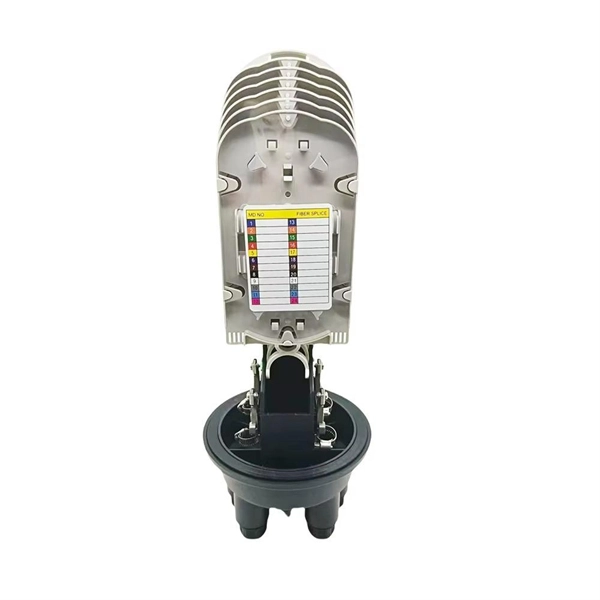
How to secure fiber optic cables using a fiber optic splice closure
The splicing process in a fiber optic splice closure involves several steps to ensure a reliable and secure connection. Firstly, the fiber optic cables are prepared by stripping the protective coatings and cleaning the fibers. The fibers are then aligned and fused together using a. By following these detailed steps, the installation of your Fiber Splice Closure will be secure, organized, and maintained, ensuring high performance and longevity of your fiber optic network.
-
Why are pigtails welded using flanges
The pigtail siphon allows a phase change to occur before the fluid reaches the pressure gauge. Put more simply, thanks to its design, the vapor that circulates through the siphon at high pressure condenses,.
-
14 Optical power of the beam splitter
For beam splitters with two incoming beams, using a classical, lossless beam splitter with electric fields Ea and Eb each incident at one of the inputs, the two output fields Ec and Ed are linearly related to the inputs through $${displaystyle mathbf {E} _{text{out}}={begin{bmatrix}E_{c}E_{d}end{bmatrix}}={begin{bmatrix}r_{ac}. OverviewA beam splitter or beamsplitter is an that splits a beam of into a transmitted and a reflected beam. It is a crucial part of many optical experimental and measurement systems, such as In its most common form, a cube, a beam splitter is made from two triangular glass which are glued together at their base using polyester,, or urethane-based adhesives. (Before these synthetic,. Beam splitters are sometimes used to recombine beams of light, as in a. In this case there are two incoming beams, and potentially two outgoing beams. But the amplitudes.
[PDF Version]
-
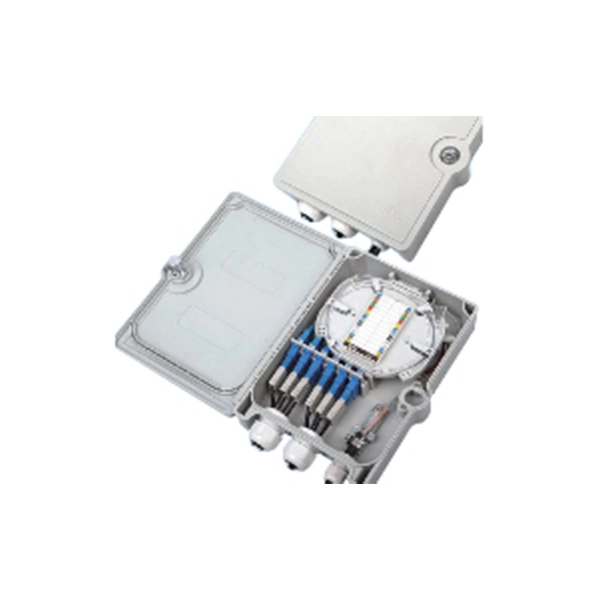
Can ADSS fiber optic cables be pulled using a cable pulling machine
3 Capstan and reel type pulling machines with approved adjustable tensioners may be used to install the ADSS fiber optic cable. The cable is pulled through the route using a winch or other pulling equipment. Splicing the. ADSS installation requires careful planning, correct tension settings, and smart hardware use. These steps help prevent breaks and signal loss. As someone who has worked on numerous ADSS projects at Bright Power Co.
-
Is the network cable using fiber optic communication or
A fiber optic Ethernet cable is one of the types of network cables that transfer data over glass or plastic fibers using light signals. The light is a form of carrier wave that is modulated to carry information. Where traditional copper cables max out at about 10 gigabits per second, fiber optic cables can handle 100 gigabits per second with commercially available hardware, and.
More communications references
- What kind of fusion splicer is needed for special optical cables
- Cable tray base specifications
- Fiber Optic Sensor Bending Principle
- High-precision connectors from ESCON Thailand
- Underground cable and optical cable process
- Cable tray installation and grounding installation
- Fiber Optic Splitter Structure Diagram
- Electrical Distribution Box Installation and Fixing Accessories
- Will the signal attenuate when passing through a cable management rack
- Fiber Optic Attenuator Sales